
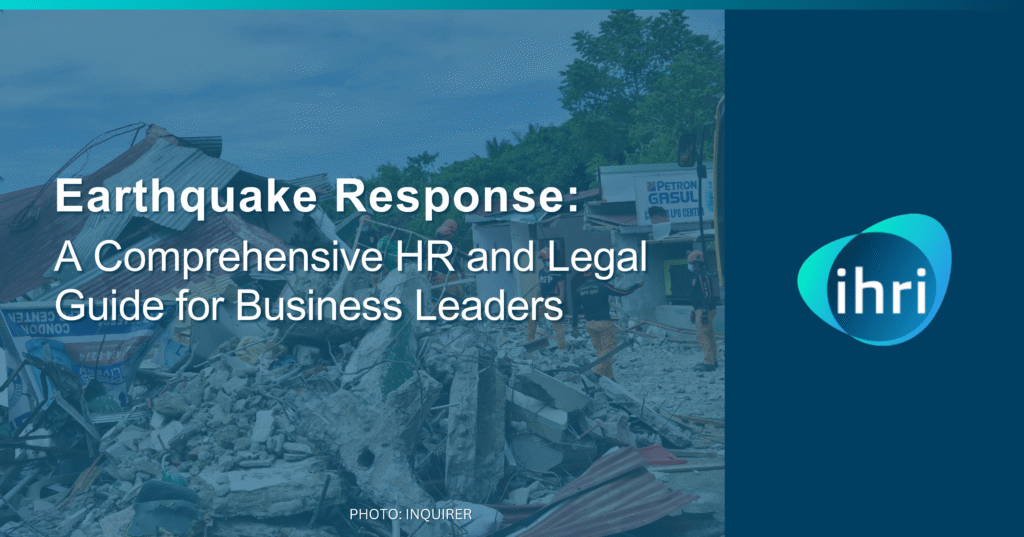
The recent earthquake in Cebu, Philippines has shaken not only buildings but also the very foundation of business continuity and employee welfare. For HR leaders and business owners, disasters like these demand more than sympathy — they call for strategic, lawful, and sustainable action.
This guide, prepared by the International HR Institute (IHRI), provides a comprehensive playbook: from immediate employee safety and welfare measures, to legal compliance under Philippine labor laws, to compensation and benefits strategies that balance compassion and business continuity.
1. Immediate Priorities for HR After the Earthquake
A. Ensuring Employee Safety and Welfare
The first responsibility of every employer is the protection of human life. HR leaders must:
- Account for all employees through roll calls, hotlines, or digital check-ins.
- Provide emergency relief: food, water, shelter, medical assistance, and psychosocial support.
- Coordinate transportation support for employees stranded due to infrastructure damage.
- Activate Employee Assistance Programs (EAP) for trauma counseling and psychological first aid.
B. Workplace Safety and Regulatory Compliance
Before resuming work:
- Ensure facilities undergo inspection by certified engineers in compliance with RA 11058 (OSH Law).
- Establish temporary work-from-home or satellite office setups until buildings are declared safe.
- Update evacuation maps, fire exits, and conduct aftershock drills once operations stabilize.
2. Legal Considerations for Employers
A. Suspension of Work and Compensation Rules
- Labor Code Provisions: Work suspension due to calamity falls under “no work, no pay” unless company policy, collective bargaining agreements, or voluntary management directives provide otherwise.
- Voluntary Employer Relief: Many employers extend calamity leave, hazard pay, or partial salary support as a goodwill gesture. This builds trust and mitigates attrition risks.
- Clear Communication: Employees must be informed in writing of suspension of operations, leave options, and pay arrangements.
B. Statutory Benefits and Relief Programs
HR should guide employees in accessing:
- SSS Calamity Loan – financial aid for members in affected areas.
- Pag-IBIG Calamity Loan – available within 90 days of declaration of a State of Calamity.
- GSIS Emergency Loan – for government employees.
- DOLE’s Emergency Employment Program – temporary work opportunities for displaced workers.
C. Data Privacy and Dignity of Information
- Personal data collected (e.g., damaged homes, medical needs, addresses) must be processed under the Data Privacy Act of 2012.
- Employers must limit collection to necessary details and ensure confidentiality when handling sensitive employee disclosures.
3. HR’s Strategic Role in Business Continuity
A. Compensation and Benefits Adjustments
After a disaster, pay and benefits are not just transactions — they are lifelines. Employers can:
- Provide emergency cash advances or financial assistance to impacted employees.
- Adjust payroll schedules to release funds earlier.
- Temporarily expand HMO coverage to include dependents or trauma care.
- Offer transportation or housing allowances for those displaced.
B. Flexible Work Arrangements
- Implement hybrid work or remote arrangements where feasible.
- Allow grace periods for attendance and tardiness until infrastructure stabilizes.
- Provide flexible scheduling to accommodate employees dealing with damaged homes or family concerns.
C. Workforce Planning and Continuity
- Identify mission-critical roles and create contingency plans for absenteeism.
- Establish agreements with vendors, outsourcing partners, or staffing firms for temporary support.
- Document all HR decisions and relief measures for accountability and audits.
4. Long-Term Organizational Resilience
A. Embedding a Disaster-Ready Culture
- Integrate earthquake and disaster drills into the HR calendar.
- Regularly train safety officers and update business continuity plans.
- Educate employees on government aid programs and disaster protocols.
B. Legal Risk Mitigation
- Review force majeure clauses in employment and vendor contracts.
- Update insurance coverage: property, business interruption, and employee life/accident insurance.
- Align continuity planning with DOLE and LGU advisories to avoid legal missteps.
C. Ethical Responsibilities
- Avoid favoritism in aid distribution; ensure transparency in relief measures.
- Prevent employee burnout during recovery by setting realistic work expectations.
- Protect employee dignity when dealing with sensitive information.
5. Spotlight on Certified Compensation and Benefits Professional (CCBP)
In moments of crisis, Compensation and Benefits (C&B) expertise becomes critical. Designing fair, lawful, and sustainable support measures is complex — and this is where the Certified Compensation and Benefits Professional (CCBP) program by IHRI proves invaluable.
Why CCBP is Essential for Post-Disaster HR Leaders
- Fair Relief Design: CCBP equips HR leaders to craft equitable assistance packages, avoiding bias or favoritism.
- Legal Compliance: Certified professionals understand how to align compensation changes with labor law, tax regulations, and government relief policies.
- Strategic Benefits Planning: Beyond immediate aid, CCBPs design resilient frameworks — such as calamity leave, hardship allowances, and disaster insurance benefits.
- Trust and Retention: Employees are more likely to stay with employers who provide transparent, well-structured benefits during crises.
In short, the CCBP credential transforms HR practitioners into strategic advisors — capable of guiding their organizations through turbulent times with both technical expertise and empathy.
6. Key Takeaways for HR Leaders and Business Owners
- Safety first, compliance always. Protect life and follow legal frameworks to avoid liability.
- Communicate with clarity. Employees look for leadership, not silence, during crises.
- Support through compensation and benefits. Relief measures should be structured, fair, and aligned with business capacity.
- Build long-term resilience. Disasters must lead to stronger continuity planning, not short-lived fixes.
- Invest in expertise like CCBP. Certifications ensure HR is equipped to balance law, strategy, and compassion.
As Cebu, Philippines begins the long journey of recovery, HR and business leaders must remember that crises are not just tests of systems, but of values. How organizations respond in the aftermath of disaster will be remembered far longer than the quake itself. By safeguarding employees, staying compliant with labor and legal frameworks, and delivering fair and structured support through robust compensation and benefits strategies, leaders can turn adversity into a moment of trust and resilience. And for those equipped with credentials like the Certified Compensation and Benefits Professional (CCBP), this is the opportunity to demonstrate the highest standard of HR leadership — proving that even in the most difficult times, people remain at the heart of every decision.
